Thanks to EKA, we now have enough wire to string our piano, and hopefully put the original Lirika back together. We have to string the prototype first because if there are any problems with the frame, we'll need to use the old one to recast it. Once the strings go on, we can't take them off again as it's very expensive to order a full set of bass strings and steels.
You might notice we have a 19 1/2 in there. This is because the Mapes American sizes we originally went looking for are a half-size larger in MWG (music wire gauge) in the UK.
US
UK
No problem with customs this time as, unlike the bass strings, the order didn't go over the import threshold. They would have delivered direct to the door yesterday, but we were out, so went to pick up from UPS today, which is based at Hôtel des Mille Collines, better known around the world as Hotel Rwanda.
Désiré is busy exploring soundboards and hammering in tuning pin bushings. Once the tuning pins are in and the frame is secured to the piano, it will go to Marion's place so that she can string it up. We'll then need to build the keys and use the action from the original Lirika to pull the strings up to pitch and find out what she'll sound like.
Turns out, we were asking the wrong people. Instead of approaching piano wire manufacturers, we should have been asking restorers and repairers, who have been much more sympathetic to our plight. After a couple of months going nowhere, we decided to try one last desperate mail out... and received a flood of helpful replies.
Our heartfelt gratitude goes out to everyone who responded, and in particular:
Martin Robertson at EKA, who sold us the strings - they're on their way.
Martin Heckscher at Heckscher & Company and Sharon Doughty at Fletcher & Newman, who also offered to source the strings for us and gave heaps of advice.
David at Courtney Pianos, who put us on to EKA in the first place.
Rebecca Doman at Abbey Piano Services for offering to help get the wire out here if we hit problems.
And, again, we want to thank Key-Sure, who really did try for us, and who explained the string sizes we needed. Their input has been invaluable.
We're so excited to get the project moving again and start talking about something other than strings.
Key-Sure have tried their hardest, but they've encountered problems sourcing the strings we need. They have been incredibly helpful in figuring out which sizes are required, but they just can't offer a timeframe for when they might be able to get them. Could take a while.
We were in contact with a Chinese company called Helin Taida, who specialise in piano wire, but the problem we keep hitting is that we need a fairly small amount - just enough to string two pianos. That's likely to be between 6-10 kg total, whereas they won't ship less than 50 kg. We don't want to order more until we know this is definitely going to work.
So, it's back to the drawing board.
Once again, we're e-mailing around anywhere that might be able to supply spring steel wires.
Please help us get the word out. If you live near to a piano shop, go in, explain the situation, beg - cry if you have to. Let's see if we can find someone with supply contacts who might be willing to help out.
Looks like 2018 is going to be quite a year for us. After several months flailing about, trying to find anyone who could help us figure out the size of piano wire we need, and supply it, we have a MASSIVE -
- for Key-Sure Pianos in Durban, South Africa. They have really been incredible. A father and son team, Kishore and Keeran Chotkan, who got in contact with us after hearing about our plight. Kishore told us the size of strings we'd need without a moment's hesitation, then went off and worked out who could supply a full set.
This is what we always hoped someone could do, but what none of the major suppliers we contacted could accomplish.
We're now at the stage where we're working out how best to get the strings here - what's the cheapest method - and we're hoping this might be the start of a long and fruitful friendship. Key-Sure have over thirty years of experience refurbishing, repairing and maintaining pianos. We've got a lot to learn from them.
We're taking a little break over Christmas & New Year, so we just wanted to wish all of our followers and supporters a very cool Yule and festive season.
Last week brought to a close the 2017 Made in Rwanda Expo, where manufacturers and crafts people across the country displayed their wares. There's a real emphasis placed on building and buying local. Rwanda Motorcycle Company won the Best Exhibitor's Award this year. You can read about it here.
We were really hoping to be able to display at the expo this year, but at the time of starting this project, we slightly underestimated the work involved in building a piano, and we wanted to wait until we have a fully functioning instrument to display - so definitely next year.
There are periods of waiting for things to arrive and trying to source the parts we can't make, but progress is certainly being made. The three hardest things about building a piano are the string frame, the strings, and the action. We've got the frame, we've got half the strings, so we're 50% of the way there, maybe a little more with the case and the keys.
We're looking forward to 2018 with all its challenges.
We were recently approached by pianist Fabio Tedde (Pianist Without Borders). He was travelling to Rwanda to play music with a group of autistic children from Autisme Rwanda, based in Gisozi. He asked if we could help him source an acoustic piano, as the full sound and vibration seems to work better with the kids than an electric instrument.
"Sure, give us a shout when you arrive," we said.
So, yesterday we got a call from the school asking if we could find them a piano for Tuesday-Friday, two hours each morning, for a group of ten children. They currently have thirty-nine at the school, but these ten respond particularly well to music.
It was a little short notice, but we were determined to find one. After almost a year of tuning pianos in Kigali, we'd seen a few. Surely it was just a case of calling around?
The best piano we could think of was the American Kimball in Kicukiro. The piano was in tune and in a nice quiet space that could easily accommodate the kids. Unfortunately, there were some major roadworks going on and the mud track leading to the church had been dug up, so we couldn't access it.
Unperturbed, we met up with Fabio at a disability NGO in town. The NGO owns two pianos, but they're both a little out of tune. The plan was to offer to tune one in return for letting the kids use it. They had told us in the past that if anyone wanted to play their pianos, they were welcome. But not this time. The owners were leaving for Christmas and weren't prepared to let their manager welcome us instead.
You Can't Use Our Piano
Next, we tried a rooftop restaurant with a nice grand piano - horribly out of tune.
This time, they wanted to know how much money the children would be spending on meals, and what we were prepared to pay.
Neither the offer of a free tuning nor feel-good publicity could sway them.
You Can't Use Our Piano
From there, we headed over to a music school.
Although their piano was close to the children's school, we weren't sure about this one because it's very old and the tuning pins slip. It doesn't stay in tune for long. Fabio loved the sound quality though, and the space was perfect for accommodating the kids. The manager was happy to say yes.
"Let me just check with the director," he told us.
It was a no.
No reason given.
It was a heartbreaking experience, travelling all over town in search of one acoustic piano for a small group of disabled children - at Christmas.
We retired to the bar to contemplate things. It was not looking hopeful.
Out of desperation, we posted a plea to a local forum called Living in Kigali.
Within an hour, we had three offers and two other leads. All from individuals willing to welcome the children into their homes. It was such a lovely response after all we'd been through that day. Kigali Keys has offered a free tuning to everyone who responded.
We took up an offer from a lady in Nyarutarama called Ilse. She had brought her father's piano with her, a German Haegele, and was happy for Fabio and the kids to make music on it.
We are really grateful to Ilse for her kindness (and piano). The kids had a lovely time and each got to have a go playing. Some of them really didn't want to leave, so it's good they're coming back tomorrow.
Music is meant to be shared.
We hope that once we can produce instruments of our own, more people will get to access them. Fabio has played hundreds of public street pianos around the world, and it is our dream to install one in Kigali. It would also be great to have a piano available to loan out to schools like Autisme Rwanda in the future.
Had a lovely day today. We had a visit from Alexandra, a journalist visiting Rwanda from the States. She's looking at all sorts of businesses in Rwanda and wanted to check out our progress. We took her to Désiré's workshop first, then on to Chillington (video above) who forge our string frames.
Here's Désiré showing how he makes our piano keys. It takes around three weeks for him to make the full set of 88.
Here's the new frame which was forged by Chillington. We had a bit of a giggle recently. We posted the original picture of Sam holding up the frame to a piano forum, where a couple of people started posting that they didn't believe it was made in Rwanda and it must have been a frame we'd taken out of another piano. Talk about conspiracy theory gone wild. I can assure everyone, it's 100% real, and 100% Rwandan.
Désiré's Workshop
Can you guess who this is, peeking round the door to Dés's office? It's our original Lirika. One day. One day you will play again...
We had a wonderful tour of Chillington with Mohammad, who has been part of this since the start. It would be impossible for us to build pianos in Rwanda if it wasn't for them. They cast the string frames, which would be too heavy and expensive to import.
First, they make a pattern from the original Lirika frame. This is made from wood. They keep every pattern for every client in their warehouse, ready to make more parts to order.
We found out that casting metal requires a huge amount of sand. So much sand that they wash it, dry it and reuse it after each casting. It's a safety thing, because sand can withstand a huge amount of heat.
The patterns are used to make moulds - ready to have liquid iron poured into them.
Some of their products (not our piano frames) require heat treatment, then dunking in cold water to harden them. This is mostly used on large lumps of metal for stone-crushing machines. Chillington originally started out making industrial-sized coffee grinders.
Finished Piece
It really was a wonderful day, touring the birthplace of our pianos. Helps us to feel more patient about the problems we're having finding strings. Chillington have offered to give us a hand looking.
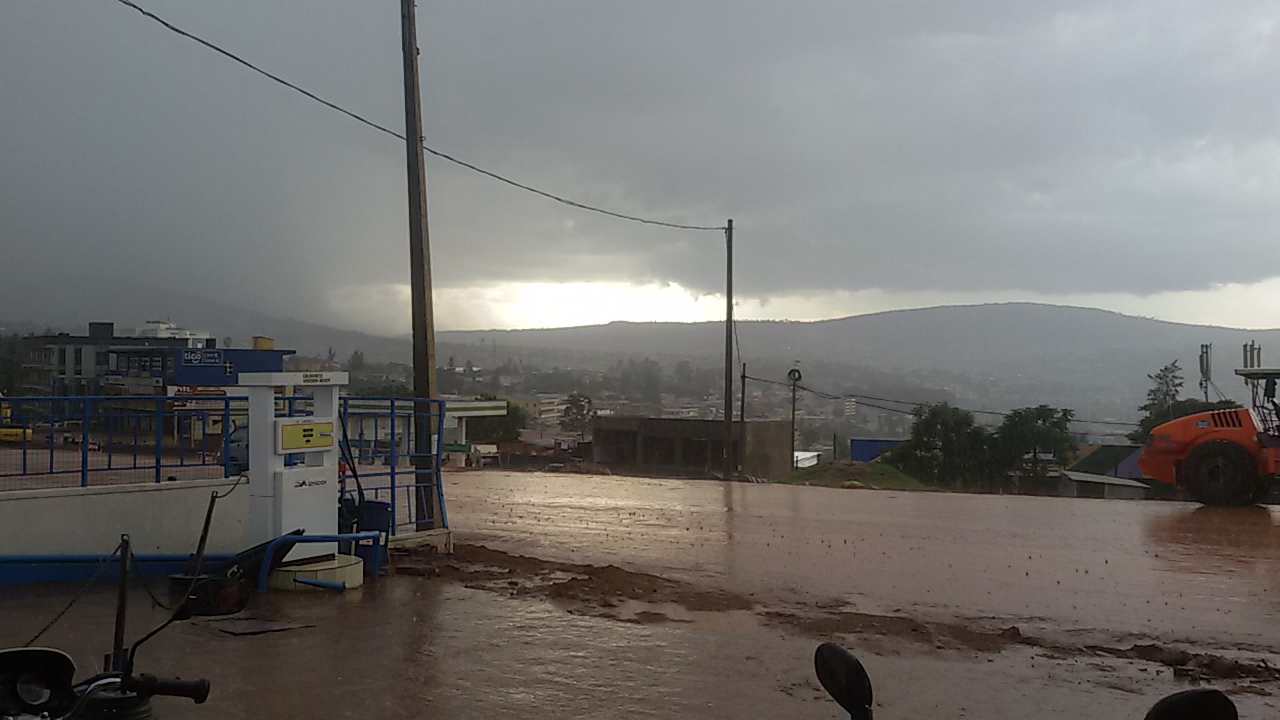
Didn't quite manage to outrun the rain on the way home. Everyone travels by public motorbike here, so we had to seek shelter at a local petrol station and wait it out. Water to sooth the fire of the foundry.